Research Program
Active Projects
Our work is organised across three research themes — shaping, decoding, and developing the technologies that connect electronic devices to the nervous system.
Theme One
Shaping Neural Dynamics
Cortical Visual Prosthetics
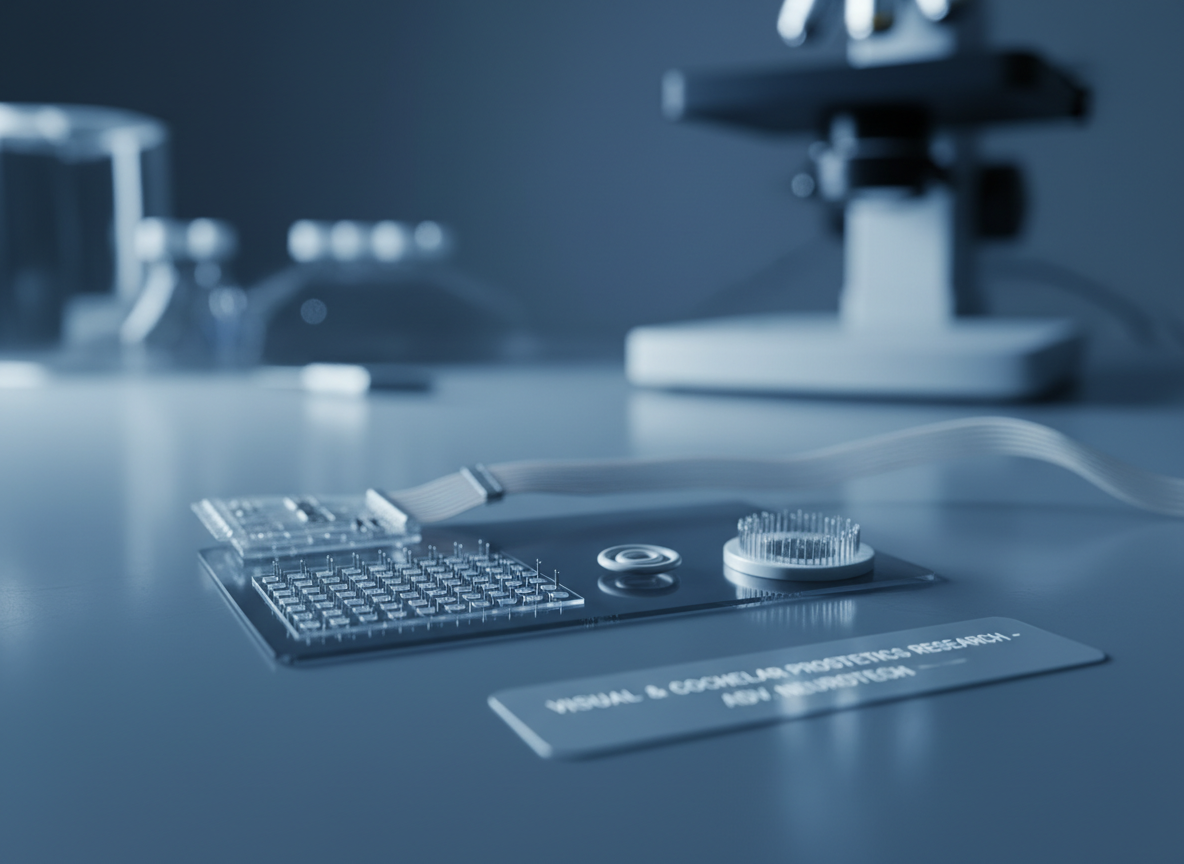
Background: Neural implants are used to treat an increasing range of disorders of the nervous system. These implants apply electrical stimulation to drive or modulate neural responses so as to restore or replace lost neurological function. For example, implants in the visual cortex can partially restore vision in blind patients by stimulating neurons in these locations. While cortical prosthetics have advantages over their retinal counterparts, e.g. a broader patient base, there are limits. First, encoding of information in the visual cortex is significantly more complex than in the retina. Second, there is patient variability in perception/benefits. Third, there is an intrinsic information bottleneck caused by the low number of electrodes compared to natural vision where there are millions of receptors.
Aims: Our project addresses these limitations by developing a new stimulation strategy: in particular a novel algorithm to be used by the implant to convert viewed images into electrical pulses delivered to the implanted electrodes. Our proposed new principle for cortical implant stimulation optimizes the transmission of data from the visual images to the encoded neural activity via the use of “sparse coding” – also known as the “Info-max” principle. It is guided by a substantial body of research demonstrating the brain naturally uses this principle to encode visual information in normal vision. By implanting a stimulating system in the primary visual cortex and recording systems in higher cortical regions, we will optimize the stimulation strategy to maximize the information in the recorded responses to stimulation, innovatively achieving closed-loop neurofeedback tailored to the individual. We will accomplish this with an interdisciplinary team spanning neuroscience modelling and electrophysiology. The outcomes are expected to greatly improve the performance of cortical prostheses, with strong potential for clinical translation, to restore high-quality vision to the blind.
Retinal Prosthetics
Background: Retinal prostheses aim to restore useful visual perception in people with vision loss by stimulating surviving retinal neurons. The effectiveness of artificial vision depends on how precisely stimulation can generate meaningful patterns of neural activity. Exploring different stimulation approaches offers opportunities to improve the spatial and temporal control of neural responses.
Aims: This project investigates electrical, optical and mechanical approaches to retinal stimulation for artificial vision. We examine how retinal ganglion cells respond to electrical pulses, optogenetic stimulation, nanoparticle-enhanced infrared stimulation, and ultrasound stimulation with and without sonogenetic approaches. Using patch-clamp recordings, multielectrode array recordings and calcium imaging, we characterise the responses evoked by each method and assess its ability to generate precise, controlled patterns of retinal activity. These findings will guide the development of stimulation technologies and strategies for future retinal prostheses.
Cochlear Implants
Background: The Cochlear Implant (CI) is a medical device that restores sound perception in people suffering severe hearing loss. As of 2017, this represents 280,000 Australians. It uses implanted electrodes to stimulate auditory neurons. Existing CIs have limited capacity to convey acoustic information needed for speech and music perception and struggle in noisy environments
Aim: Investigate an approach to improve the function of cochlear implants (CIs). This approach involves adapting a stimulation strategy that was originally developed for the bionic eye for use in the CI. This project aims to improve the accuracy of auditory neuron activation by mitigating the issue of spreading electric currents. Current fields produced by electrodes in CIs spread out before reaching the neurons, limiting their specificity. Additionally, electrodes positioned too close together produce overlapping fields, reducing the information provided by each. As a consequence, present CIs only utilise a limited number of electrodes due to reduced channel independence. A solution has been developed for a similar device, the bionic eye, which involves a new stimulation strategy (called Neural Activation Shaping, NAS) that solves identical current-spread issues. This strategy applies current from all electrodes simultaneously and utilises the electrode-electrode interactions to enhance control of the electrical currents and neural activity. The goal of this project is to adapt this strategy for use in the CI. This involves modelling the behaviour of electrodes and neurons and generating an algorithm to control the CI.
Theme Two
Decoding Neural Dynamics

Models of the visual system and neuromophic engnieering for computer vision
Background: This project will leverage insights from recent developments in modelling and simulating biological spiking networks with spike-based learning to develop innovative computer vision algorithms. The project will bridge the gap between computational neuroscience and practical computer vision, exploring how the efficiency, temporal dynamics, and adaptive learning capabilities of biological neural systems can inform and enhance the next generation of artificial Spiking Neural Networks (SNNs). This interdisciplinary approach seeks not only to advance our understanding of neural information processing but also to increase the efficiency and robustness of computer vision systems.
One of the key factors that has held back the more widespread application of SNNs and neuromorphic computing has been the limited understanding of the computational principles, or “neural algorithms”, that underlie the brain’s neural circuits. The recent advances in artificial intelligence (AI) using neural networks have used a variety of non-spiking networks, including Convolutional Neural Networks (CNNs) for image and video recognition tasks, Recurrent Neural Networks (RNNs) for sequence data like speech and text, Generative Adversarial Networks (GANs) for generating new data similar to the input, and Large Language Models (LLMs) for predicting text sequences. The current dominance of these architectures is largely due to the established learning methodologies and algorithms upon which they are based, and the flexibility in adapting these for a range of AI applications. While considerable progress has been made in adapting these methods and algorithms for use with SNNs, such as by converting spikes into spike rates, these approaches have generally not been designed specifically for spike-based processing, and consequently have reduced the inherent advantages of using a spike-based system.
Aims: This project aims to develop SNN models of the learning and processing of the visual system and implement these neuromorphic computing platform including SpiNNaker 2 and Deep South. Recent advances in understanding and modelling spike-based learning, such as spike-timing-dependent plasticity (STDP), together with homeostatic plasticity and other features of biological spike-based neural processing, such as sparse coding, the balance between excitation and inhibition in neural systems, neural specificity (separate populations of excitatory and inhibitory neurons), provides the opportunity now to develop fully spike-based neural learning algorithms for SNNs, as proposed in this project.
Brain Criticality in Neurological and Psychiatric Disorders
Background: Brain criticality is the hypothesis that neural networks operate near a transition between ordered and disordered activity. Operating near this transition may allow the brain to balance stable activity with sensitivity to new inputs, supporting information processing, adaptability and flexible responses. This framework offers a way to investigate how changes in the organisation and coordination of neural activity relate to brain dysfunction. In neurological and psychiatric disorders such as epilepsy and depression, altered network dynamics may reflect disruptions to this balance. Understanding these changes could provide insights into disease mechanisms and reveal how treatments influence brain function.
Aims: This project investigates how brain criticality changes during disease progression and in response to treatment in animal models of depression and epilepsy. We record neural activity and analyse its temporal and spatial organisation to characterise how patterns of network activity emerge, propagate and evolve. We aim to determine whether measures of criticality can distinguish healthy and disease-associated states, track changes over time, and reveal features of network dysfunction that may not be captured by conventional measures of neural activity. By linking measures of network activity to disease progression and therapeutic effects, we aim to assess their potential as biomarkers for monitoring disease and evaluating interventions. The broader goal is to inform neuromodulation strategies and drug development by identifying how treatments can promote more functional patterns of neural activity.
Theme Three
Developing Neural Interfaces
Carbon-based Neural Interfaces
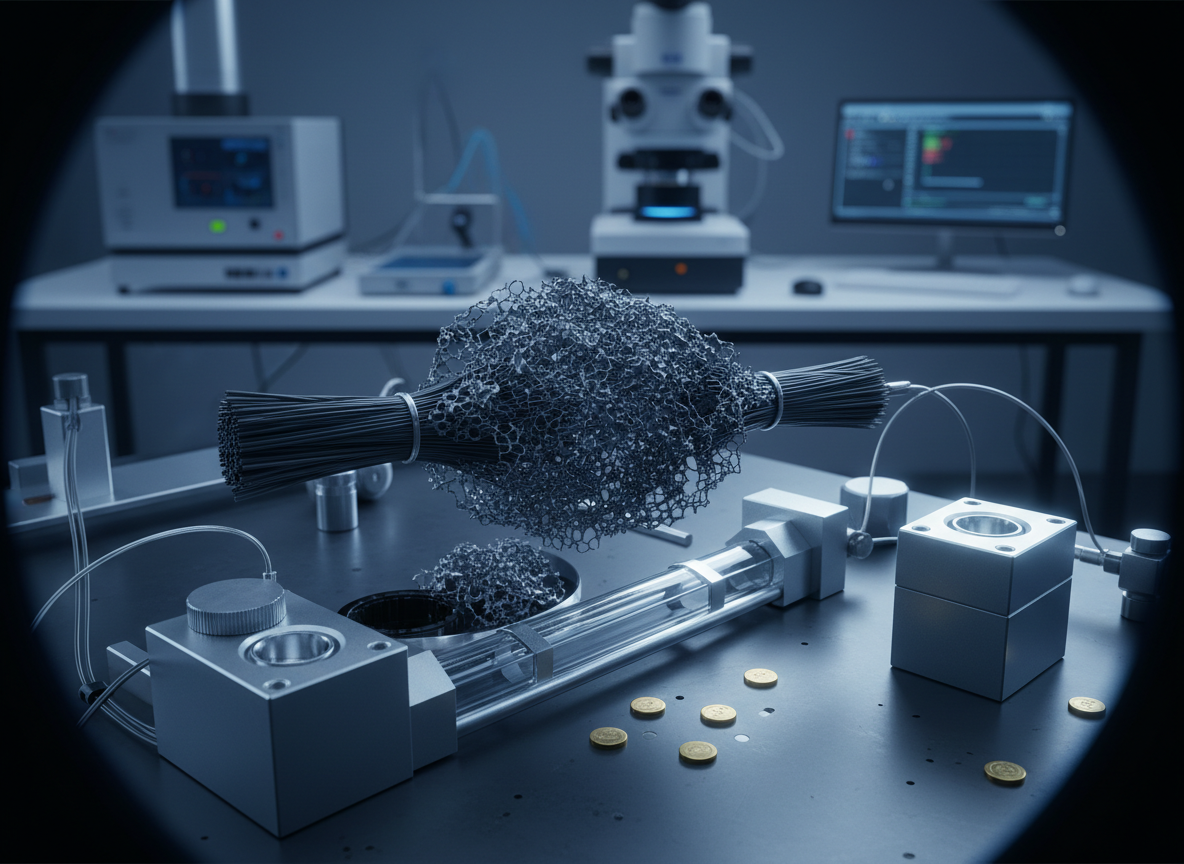
Background: Neural interfaces provide a direct connection between electronic devices and the nervous system, enabling researchers to record neural activity, investigate neural function and deliver stimulation for biomedical applications. Integrating electrical stimulation, electrophysiological recording and neurochemical sensing could provide a more comprehensive view of neural function by capturing both electrical activity and the chemical environment in which it occurs. Achieving this requires materials and electrode designs that support sensitive measurements, effective stimulation and reliable interactions with neural tissue. Carbon-based materials—including diamond, carbon fibres, graphene and carbon nanotubes—offer a versatile platform for developing these multifunctional interfaces. Their diverse electrical, electrochemical, mechanical and surface properties create opportunities to tailor electrodes to different recording, stimulation and sensing tasks. Understanding how these properties translate into device performance is essential for developing interfaces suited to specific experimental and biomedical needs.
Aims: This project aims to develop carbon-based multielectrode arrays that combine neural stimulation, electrophysiological recording and neurochemical sensing. We investigate how material composition, surface modification, electrode geometry and fabrication methods influence key aspects of performance, including recording sensitivity, stimulation efficiency, chemical selectivity and stability. Through device fabrication and experimental characterisation, we aim to identify designs that support reliable measurements and controlled stimulation while maintaining compatibility with neural tissue.
Non-Animal Models for Neural Interface Development
Background: Neural interface development often relies on animal studies to evaluate device performance and interactions with neural tissue. These interactions involve more than the ability to record or stimulate neurons: they also depend on the surrounding cellular environment, the organisation of neural networks and tissue responses to implanted materials. Reproducing relevant aspects of this complexity in controlled laboratory models could help researchers identify promising designs, investigate mechanisms of device–tissue interaction and refine technologies before progressing to animal studies. In vitro models offer opportunities to examine these factors under conditions that can be systematically controlled and monitored. However, their value depends on how well they reproduce the biological features relevant to a particular application. Developing more predictive models therefore requires a balance between biological complexity, experimental accessibility and reproducibility, alongside a clear understanding of what each model can—and cannot—represent.
Aims: This project aims to develop in vitro models that reproduce selected structural and functional features of the neural environment encountered by neural interfaces. We will use these platforms to evaluate electrical stimulation, neural recording and interactions between electrode materials and neural tissue. Particular emphasis will be placed on assessing neural viability, network activity and the stability of interface performance over time. We also aim to establish reproducible testing methods that allow interface materials, electrode designs and stimulation strategies to be compared under controlled conditions. By examining how model composition and culture conditions influence measured responses, we will identify which features are necessary for different testing applications and assess the models’ relevance to in vivo performance. The broader goal is to create practical, reliable platforms for screening and refining neural interface technologies, supporting more informed experimental decisions and reducing reliance on animal studies.

